

Unifying the Employee Experience
Employees at a 130,000+ person global organization navigated 10+ disconnected HR tools for everyday tasks. I led experience strategy and design, turning research into a framework that made support easier to find, faster to use, and more human.
Role
Experience Design Lead
Team
HR · IT · Internal Communications · Research · Visual Design
Company
Global technology and retail company
The Situation
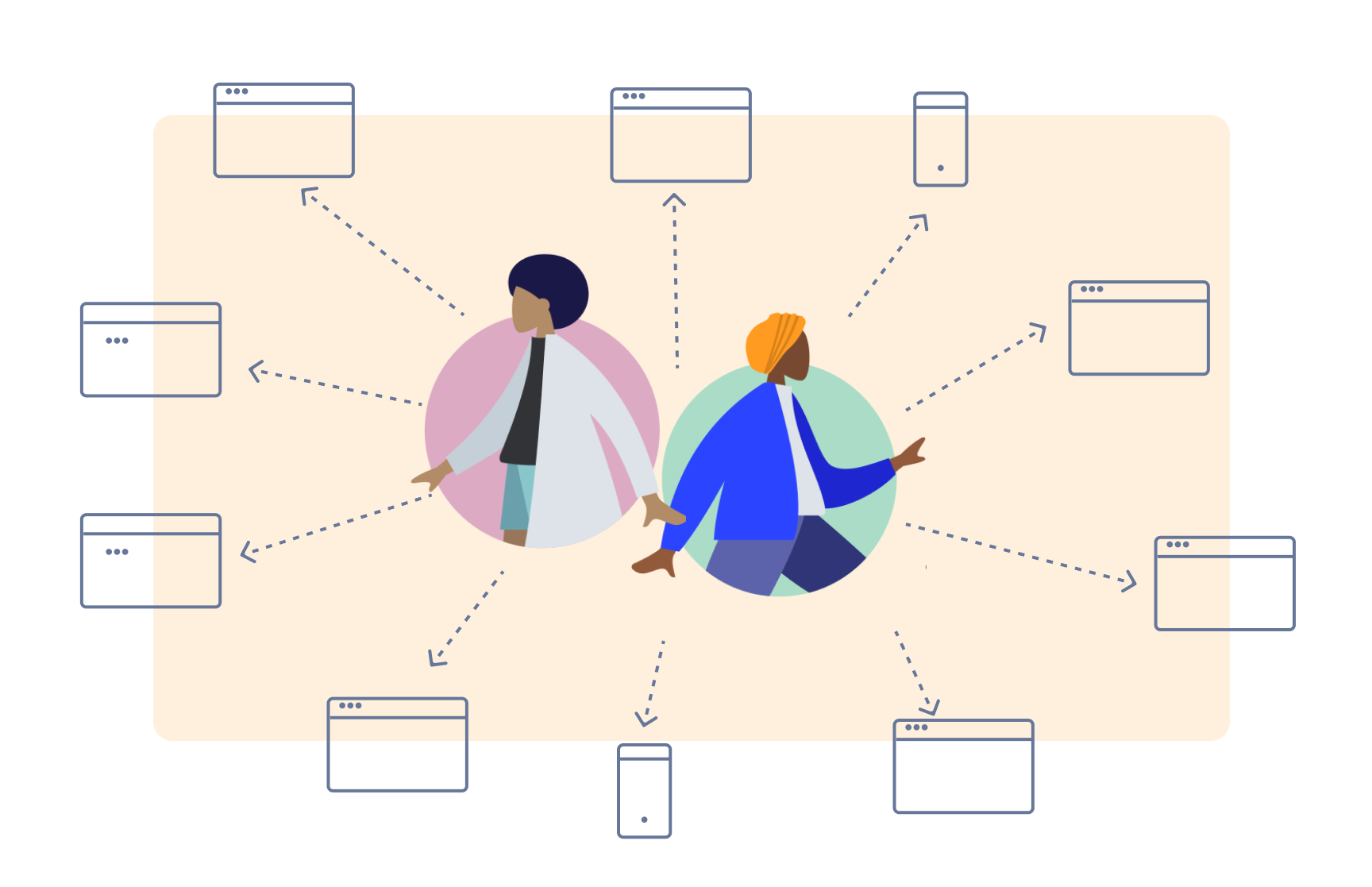
HR support was everywhere and nowhere. Ten-plus disconnected tools and sites. No single place to start. Employees spent time figuring out where to go before they could get anything done.
The problem wasn't just fragmentation. It was inequity. Non-US employees found information that wasn't available in their language or was poorly translated. Retail employees felt underserved compared to their corporate counterparts. And almost no one knew the full extent of what was actually available to them.
My Role
Experience Design Lead. I co-conducted generative research alongside another researcher, owned the experience strategy and journey framework, and led the design of the portal, chatbot POC, and reusable design tools.
The Approach
Research came first. I co-conducted in-depth interviews with 100+ employees globally as part of a larger study. The findings were specific and human.
Non-US employees felt like second-class citizens in their own HR system. Retail workers felt the whole thing was built for someone else. Nobody knew what was available. Nobody knew where to look.
From that research, a distinction emerged that shaped everything. There are major HR moments: a promotion, a relocation, a job change, a misconduct situation, where employees want and need a higher level of human support. Their manager, an HR partner, someone who knows their situation. And there are recurring tasks: requesting time off, submitting a reimbursement, where employees are happy to self-serve, as long as the context is clear and the path is obvious.
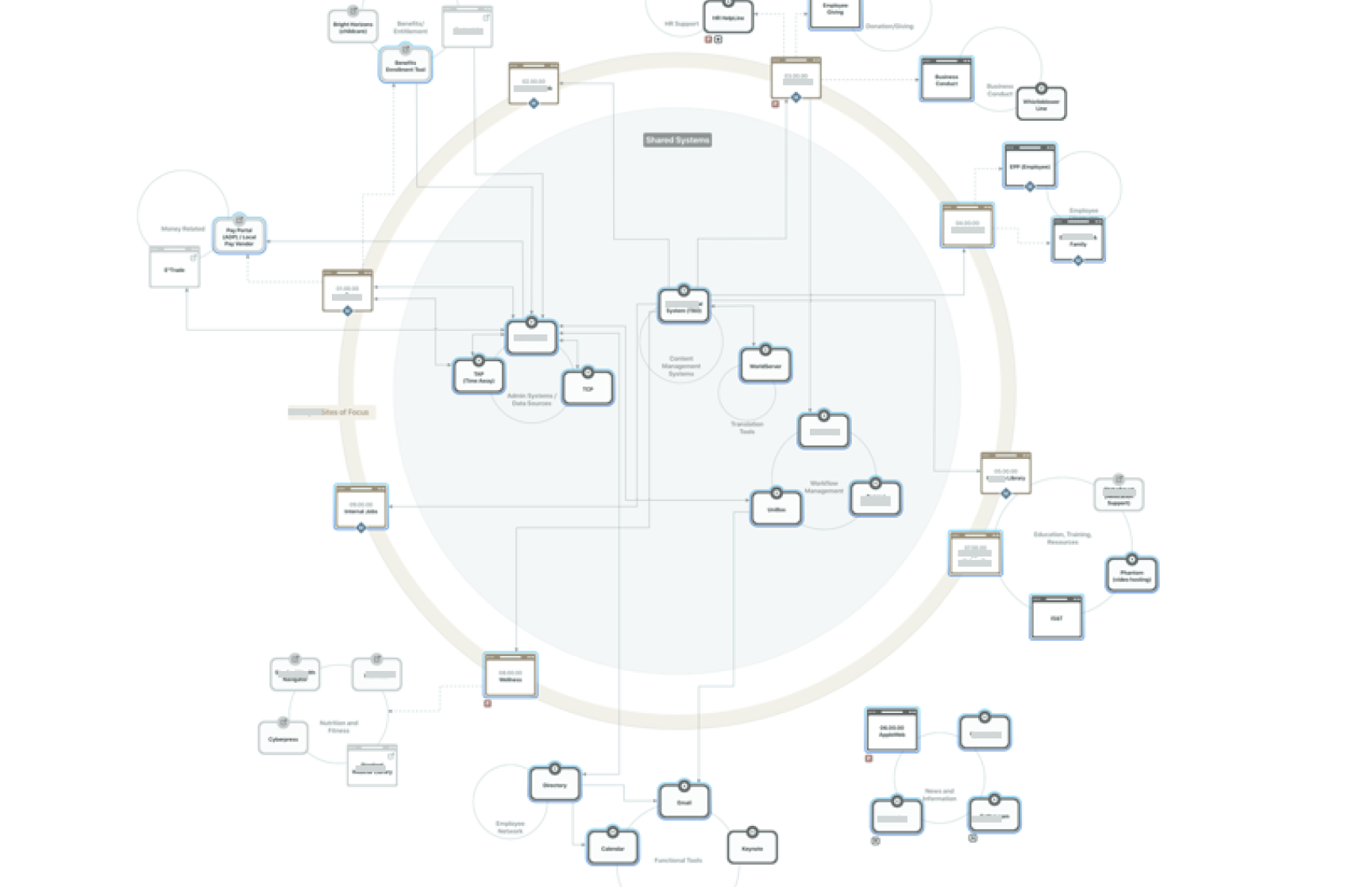
That distinction became the strategic frame. Not one experience for all scenarios. A spectrum of support calibrated to what each moment actually required. I mapped journeys across seven personas covering major life events and everyday tasks. I worked with HR, IT, and internal communications to align on experience principles. And I designed a unified HR portal concept, a chatbot POC for everyday tasks, and a set of reusable design tools: rich personas in poster, page, and card formats, experience principles, and flows that the client could use independently to guide their ongoing HR transformation.
What Shipped
A journey framework, experience principles, 7 rich personas, a unified HR portal concept, and a chatbot POC. All designed to be used, not just presented and filed away.
What Changed
- Journey framework became a shared reference across HR, IT, and internal communications
- Printed personas and experience principles actively used by HR groups for roadmap planning and design decisions
- Distinction between major moments and recurring tasks shaped the experience strategy and informed future design investments
- Reduced friction for everyday tasks and pressure on frontline HR support