

De-risking Design. Building Trust.
The design team had been flagged as a delivery Risk item on the executive steering committee's RAID report. Timelines were slipping and I was asked to investigate. What I found wasn't a performance problem. It was a systems problem. Work arrived with inconsistent context, scope had no containment mechanism, and delays were being attributed to design rather than ambiguity.
Role
DesignOps Manager
Team
UX Designers · UX Writers · UX Researchers · Product · Business Analysts · Developers
Company
Co-operators
The Situation
The UX Design Director had left. The AVP was stepping in as interim. The design team had been flagged on the executive steering committee's RAID report. The perception was that design was slowing delivery and making too many late changes.
My Role
DesignOps Manager. I was not responsible for the design team directly. But I was close enough to the work to see what was actually happening. I was asked to diagnose the problem and architect the fix.
The Diagnosis
The design team was operating in a no-win situation created by the system around them. Not by them.
Work arrived through individual chats and emails with inconsistent context. No clear criteria for what a brief needed to include. No defined ownership over who was responsible for what. The team looked slow when they were actually under-resourced with incomplete information.
After work was delivered, product continued to request changes with no process to contain scope. The team absorbed these requests without a mechanism to push back. Design became the most visible part of an unmanaged change problem.
The team also had no reliable way to communicate how long work would take. Delays were attributed to design capacity rather than scope ambiguity.
The Fix
Four changes. All of them systemic. None of them about the team's performance.
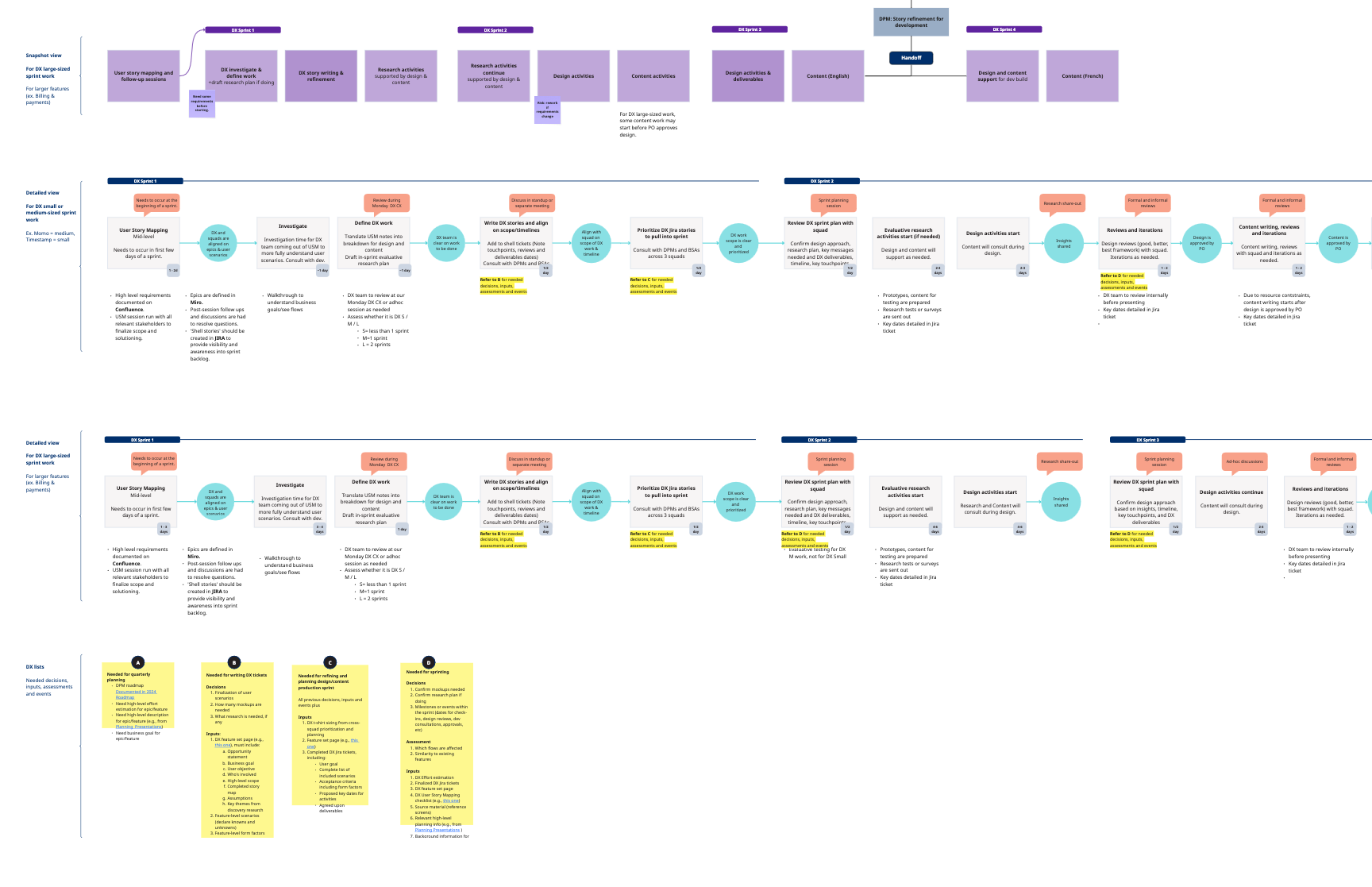
Intake workflow. A clear framework defining what information was required to start design work, who was responsible for providing it, and what happened if it wasn't there. Shared across product and UX. The back-and-forth dropped significantly.
Change management process. Working with product and development peers, a process for managing post-delivery change requests. The design team now had a legitimate mechanism to flag scope changes rather than silently absorbing them.
Time estimation and communication. Realistic estimates for design work, communicated clearly to stakeholders. An invisible process became visible and accountable.
Research integration. In partnership with the UX Research Director, researchers moved earlier into the design workflow. Earlier meant reducing rework rather than validating decisions after the fact. The design and content team was upskilled on usability testing, enabling squads to move faster without waiting on centralized research capacity.
What Changed
- Design removed from executive steering committee risk register within two months Intake workflow established with clear brief requirements and shared ownership
- Scope management process implemented across design, product, and development
- takeholders who had been frustrated reported satisfaction with the new working model
- AVP hired me as UX Design Director that fall to lead the team through the next phase