
Making Complexity Navigable
Teams worked in silos with no shared view of the end-to-end journey. I mapped the full Assent ecosystem, surfaced the gaps, and facilitated the alignment that gave everyone a common picture to build from.
Role
UX Architect (Principal Product Designer)
Team
Product Designers · Product · Engineers
Company
Assent
The Situation
Assent's supply chain compliance platform served multiple audiences. Customers, suppliers, and internal teams all depended on it. But Design, Product, and Engineering were building in silos with no shared understanding of how the end-to-end platform fit together.
Squads were making decisions from partial views of the system. There was no single artifact that showed how users, tools, touchpoints, and data flows connected across the whole platform.
My Role
UX Architect (Principal Designer). I owned the ecosystem view: the mapping, the facilitation, and the translation of a fragmented platform into something every squad could reason from and build on. The product designers embedded in each squad owned their end-to-end design work. My job was to give them a shared frame to work within.
The Approach
The design team was operating in a no-win situation created by the system around them. Not by them.
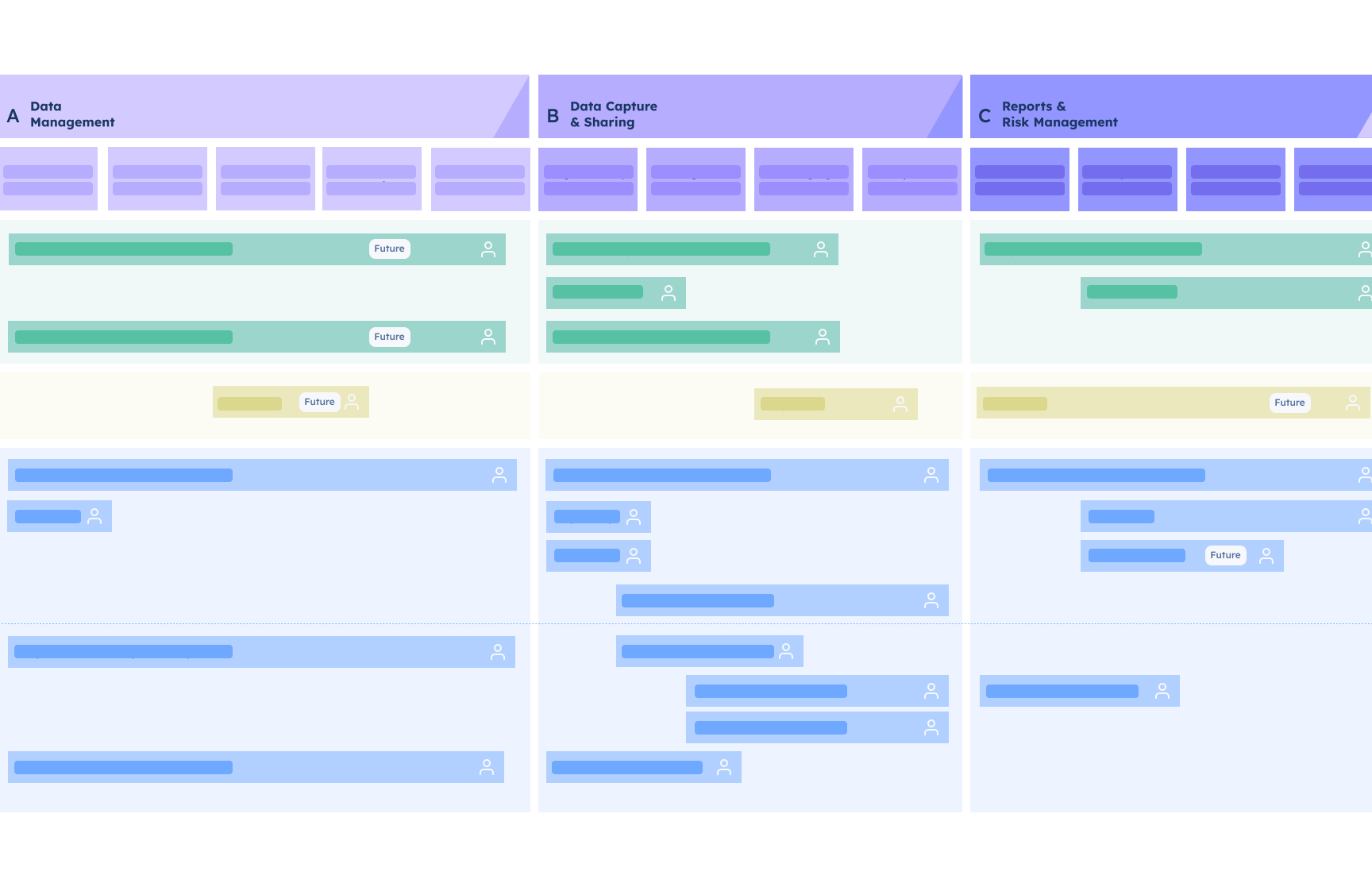
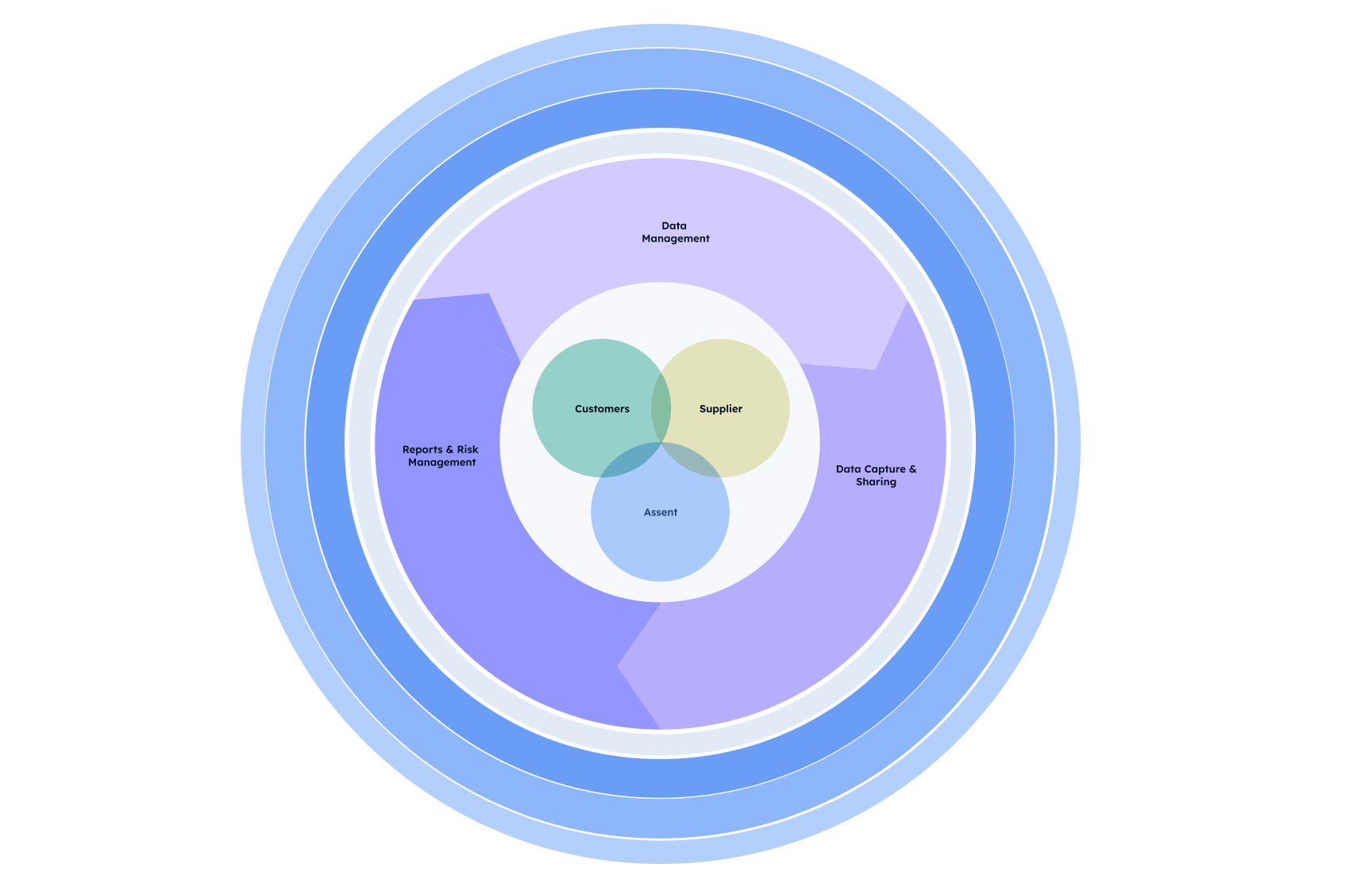
I mapped the full Assent ecosystem. Users, tools, touchpoints, and data flows across every part of the platform. The goal wasn't a comprehensive documentation exercise. It was a shared mental model. Something that made the complexity navigable for the people who needed to work inside it every day.
The mapping surfaced handoffs nobody had named, dependencies nobody had tracked, and friction points that only became visible when the full system was in view at once.
From there, I facilitated cross-functional workshops with Design, Product, and Engineering. Not to present findings. To build alignment. The workshops were structured so that teams arrived at a shared frame of reference together, rather than being handed one.
What Shipped
A living ecosystem map. Adopted across squads as the primary alignment artifact for roadmap planning, onboarding, and leadership storytelling.
What Changed
- Ecosystem map adopted as the primary alignment artifact across squads
- Conversations shifted from isolated features to end-to-end journeys
- Map used for onboarding, roadmap planning, and leadership storytelling
- Teams that had been designing from partial views of the system now had a shared frame of reference to build from and evolve together