

From Opinion to Evidence
A single combo field, year, make, and model in one input, was dropping users at the moment they were ready to quote. The problem was visible. The solution was contested. I directed the team to build the evidence case before anyone touched Figma.
Role
UX Design Director
Team
UX Designers · UX Writers · UX Researchers · Product Manager · Business Analysts · Developers
Company
Co-operators
The Situation
The vehicle selection field sat at a critical moment in the auto quoting flow. Users were ready to start. Then they hit a combo input that asked them to type year, make, and model in a single field and a meaningful number of them didn't make it through.
The debate initially was about design preference. I reframed it as a question of evidence.
My Role
UX Design Director. I directed the design research, set the framing for how findings and experience direction would be presented to stakeholders, and drove the cross-functional alignment that got technical teams on board.
The Approach
Before anyone proposed a solution, we went looking for what was actually true.
User research confirmed what the drop-off data suggested. The combo field created confusion at a high-stakes moment. Users weren't sure how to format their input. Uncertainty at the point of quoting erodes trust.
Competitive research made the case harder to argue with. Peer enterprises, banks and other regulated financial institutions, consistently used a three-field sequential approach over the combo format. This wasn’t a startup pattern. It was the industry standard for organizations like Co-operators.
That combination, user evidence plus competitive preceden, shifted the conversation. Not designers pushing a preference. An evidence base pointing in one direction.
What Shipped
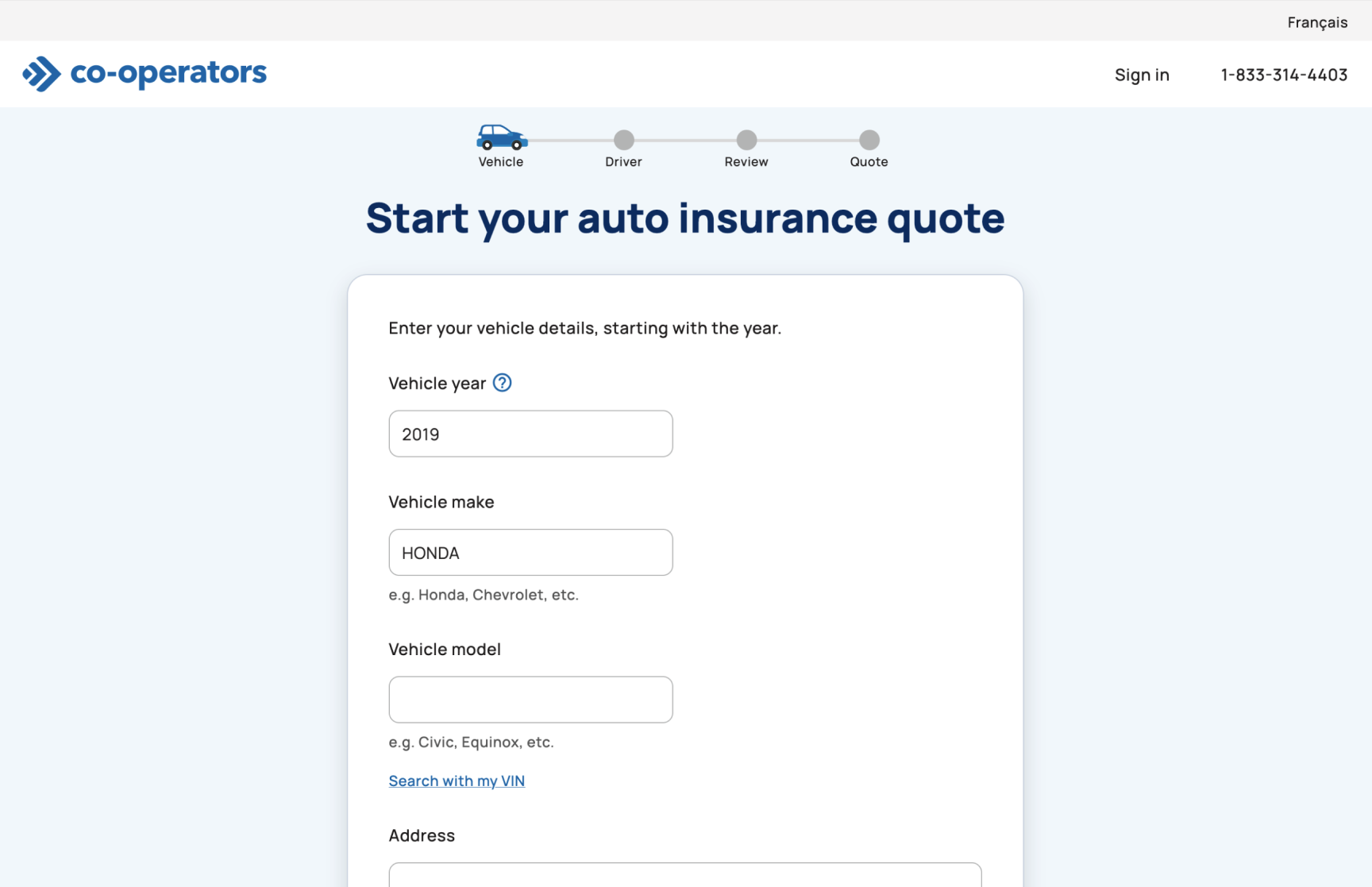
A three-field sequential selection experience. Year, then make, then model — each step progressive, each one narrowing the options. Trim selection was preserved as a third field, balancing the UX need for clarity with the pricing requirements that had previously complicated the conversation.
Shipped summer 2025.
What Changed
- Three-field progressive selection replaced the original combo input
- Trim selection preserved as a third field, satisfying both UX and pricing requirements
- Established an internal model for how design and research build cross-functional cases with technical stakeholders